
The 3 Movements Your Body Needs to Stay Strong, Energetic, and Flexible for Life
Most people think fitness is about working harder, sweating more, or following the latest trend. But when you step back and look at how the body works, one thing becomes clear: the body doesn't do well on intensity alone. It does well on balance.
That's why Step tracks three weekly targets: Strength, Cardio and Flexibility.
These aren't categories made up for convenience. They reflect how the body works, adapts, and keeps going over time. When these three are trained in balance and adjusted as life changes, fitness becomes something you can keep doing instead of something that wears you out.
This idea is the foundation of how Step coaches you.
Why Most Fitness Programs Miss the Big Picture
Many programs lean too hard on one type of movement. Some push cardio every day. Others focus only on strength. Many treat flexibility as optional, or as something to do only when you're hurt.
The problem isn't effort. It's imbalance.
Many people find that training only one way leads to:
- Plateaus and stalled progress
- Aches from doing the same thing over and over
- Tiredness and burnout
- Loss of motivation
The body is a system. Training only one part of it eventually creates friction.
Step's three targets exist to solve this exact problem.
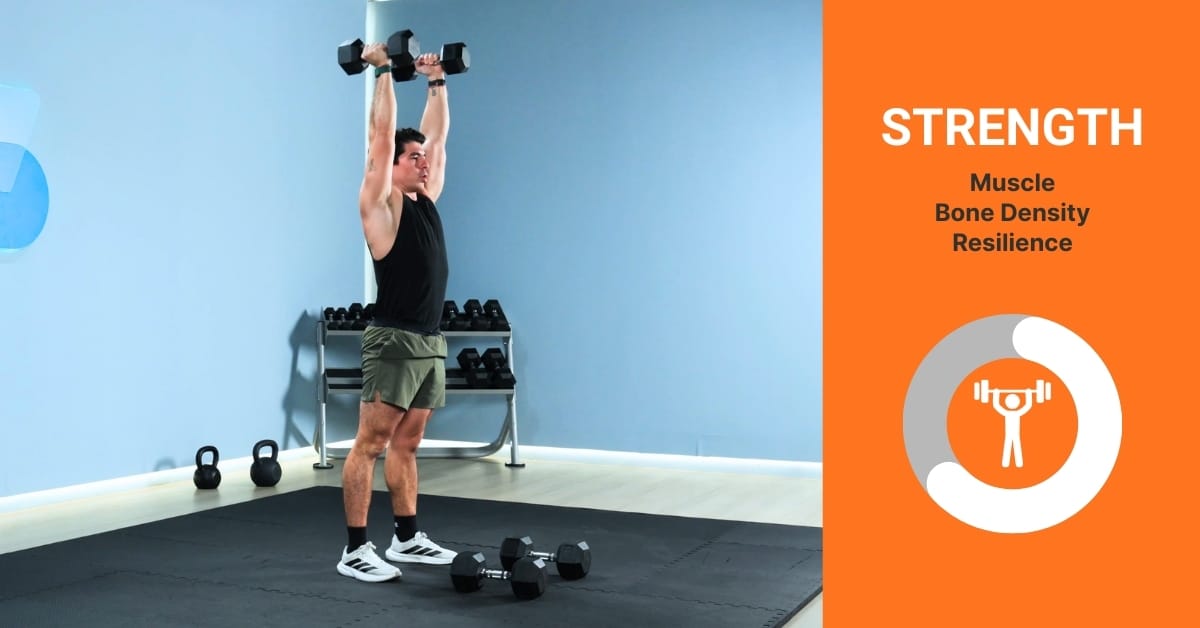
Target One: Strength Builds Resilience, Not Just Muscle
Strength is often linked with looks, but its real value is resilience.
As we get older, we tend to lose muscle unless we work to keep it. Strength training can help with:
- Steady, stable joints
- Keeping the muscle you have
- Everyday energy
- Confidence in daily movement
Without strength, even simple tasks get harder over time. This is why Step treats Strength as a core target, not an optional add-on.
Classes like full-body strength, bodyweight training, and controlled resistance work help you keep a strong base that supports everything else you do.
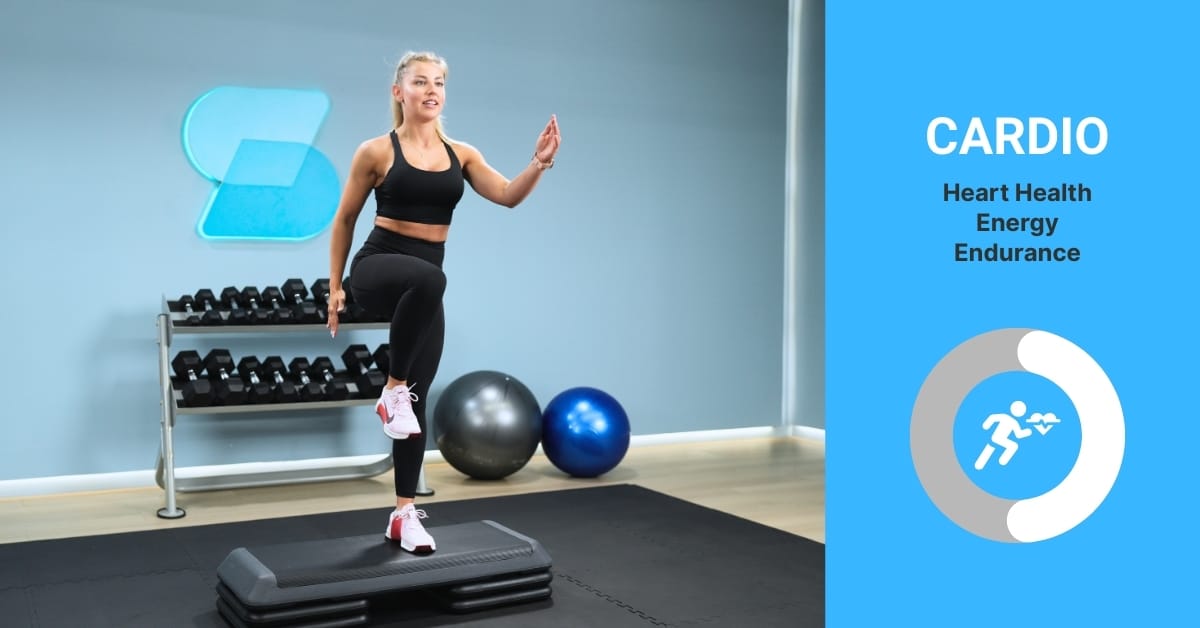
Target Two: Cardio Fuels Energy and Stamina
Cardio is the engine of the body. It helps with:
- Stamina and endurance
- The fitness of your heart and lungs
- Focus and mood, for many people
- Daily energy levels
Health guidelines for adults recommend regular cardio every week. But cardio doesn't need to mean extreme intensity.
Cardio can take many forms. Walking, dance workouts, martial arts, and anything that raises your heart rate all count. What matters is doing it often, at a level that fits you today.
When cardio is balanced with strength and flexibility, it gives you energy instead of draining it.
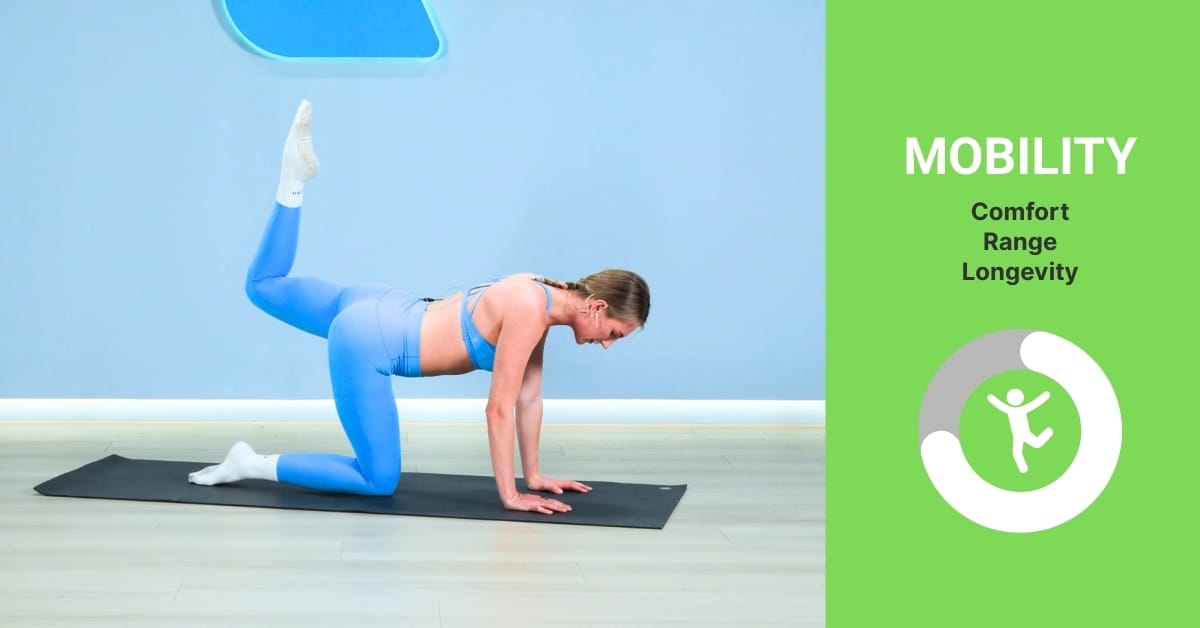
Target Three: Flexibility Helps You Move Well as You Age
Flexibility is often misunderstood, yet it may matter most for how you feel day to day.
Flexibility helps with:
- Joint range of motion and comfort
- Balance and coordination
- Less stiffness
- Using your strength and cardio well
People who move well often stay active longer and bounce back more easily.
Step treats Flexibility as a core target, not a recovery afterthought. Classes like Pilates, yoga, and guided recovery flows help you keep moving well, so the body stays adaptable instead of rigid.
Why These Three Movements Must Work Together
Strength without flexibility can leave you stiff.
Cardio without strength can leave you less resilient.
Flexibility without strength or cardio limits what you can do.
The body doesn't respond well to extremes. It responds to balance.
When Strength, Cardio, and Flexibility are trained together, they support each other. This balance helps with:
- Better recovery
- Fewer setbacks
- More consistent training
- Steady energy over time
This is the logic behind Step's three targets.
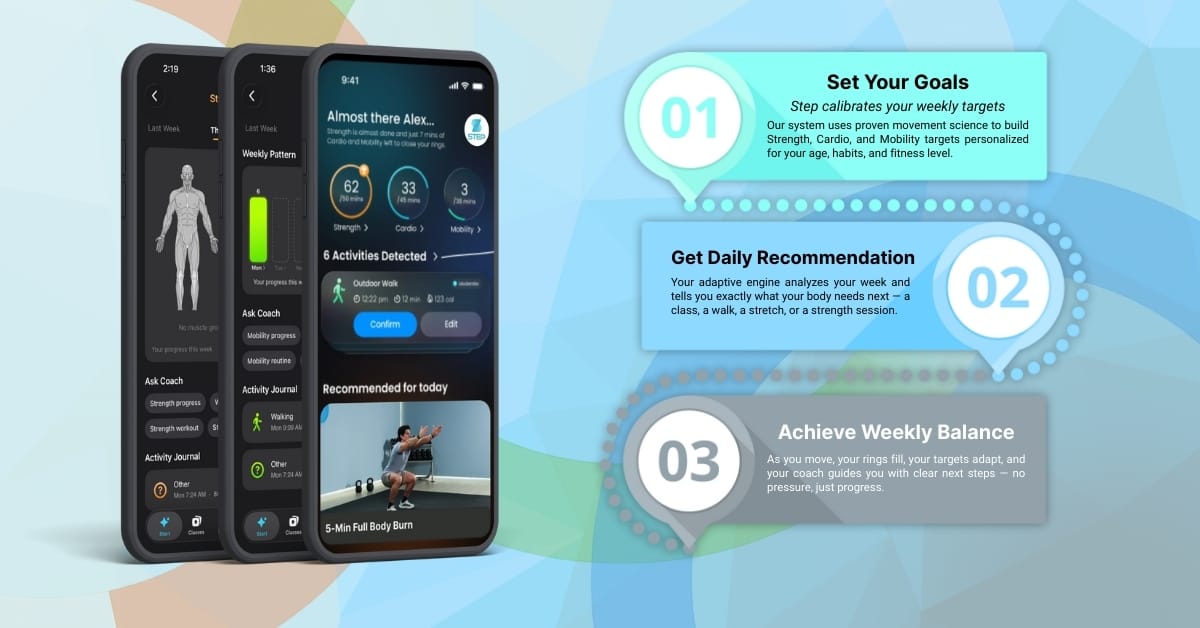
From Targets to Your Week
The next step in fitness isn't adding more workouts. It's making smarter choices about how you move.
Your body's needs change week to week. Sleep, stress, age, work, and recovery all affect what kind of movement helps most on a given day.
Step tracks your three weekly targets, so you can see how each target is going this week. Step also suggests a few sessions for you on the Start screen.
Have a question? Ask Coach is in the app.
Why This Matters for Real People
For busy professionals, the three targets help avoid burnout and wasted effort.
For beginners, they give clarity and confidence.
For people over 40, they help you look after your joints and your energy.
For former athletes, they make it easier to train smart without overdoing it.
The three targets give you one simple framework. It fits very different lives and goals.
A Smarter Way to Move Forward
Fitness doesn't need to be extreme to work. It needs to be intentional.
By tracking Strength, Cardio, and Flexibility each week, Step helps you keep all three in your routine. This balance is what lets fitness become a lifelong habit instead of a short phase.
If you have a health condition, check with your doctor before you start a new routine.
Moving better beats doing more.
Read More
How Should You Plan Your Workout Week After 40?
Most adults over 40 do well with Strength 2 to 3 days a week, Cardio on most days, and a little Flexibility almost every day.

How Can Women Over 40 Lose Visceral Fat?
Women over 40 can reduce visceral fat through a combination of regular aerobic movement such as brisk walking, strength training, healthy nutrition, adequate recovery, and a routine they can maintain consistently. You cannot target visceral fat with abdominal exercises alone, and there is no special heart-rate zone that selectively melts belly fat. The strongest evidence supports reducing overall body fat while preserving muscle and staying physically active across the week. For women entering

Is Walking a Good Workout for Busy Adults Over 40?
Yes, walking is one of the best workout choices for busy adults over 40 because it is low-impact, easy to repeat, and strongly linked to better heart health, longevity, mood, and daily energy. For people who do not have time for long gym sessions, walking offers a realistic way to build a healthier lifestyle. The challenge is not whether walking works. The challenge is staying consistent. This is where Step.co’s Walk and Talk feature makes walking more useful, more accountable, and more social.