

Why You’re Not Losing Weight Even If You Exercise
If you’re exercising but not losing weight, it’s usually because of a mismatch between calorie balance, training type, recovery, and consistency. Research shows that exercise alone does not guarantee fat loss. Weight loss depends on how your body responds to a combination of movement, muscle mass, stress levels, and overall energy balance.
This is especially common for people over 30 or 40, where metabolism, recovery, and hormones start to change.
The Most Common Reasons You’re Not Losing Weight
1. You’re Overestimating Calories Burned
Many people believe they burn more calories than they actually do.
Research from the American Council on Exercise shows that:
- Most workouts burn fewer calories than expected
- Fitness trackers often overestimate calorie burn
- A single workout cannot offset high daily calorie intake
Example:
A 30-minute workout may burn 200 to 300 calories, which can be offset by one snack.
2. You’re Only Doing Cardio
Cardio helps burn calories, but it is not enough on its own.
Without strength training:
- You may lose muscle along with fat
- Your metabolism slows down
- Your body becomes less efficient at burning calories
Studies show that combining strength and cardio leads to better fat loss and body composition than cardio alone.
3. You’re Not Building or Maintaining Muscle
Muscle is metabolically active tissue. It helps your body burn more calories even at rest.
After age 30:
- Muscle mass naturally declines
- Metabolism slows down
Without resistance training, weight loss becomes harder over time.
4. You’re Doing Too Much High-Intensity Training
High-intensity workouts can be effective, but too much can backfire.
Excessive intensity can:
- Increase cortisol (stress hormone)
- Lead to fatigue and burnout
- Reduce consistency
- Trigger hunger and overeating
Research shows that moderate, sustainable training often leads to better long-term fat loss than extreme programs.
5. You’re Not Recovering Properly
Recovery plays a critical role in fat loss.
Poor recovery can lead to:
- Chronic fatigue
- Reduced performance
- Hormonal imbalance
- Increased injury risk
Studies from the National Institutes of Health show that sleep and recovery directly affect metabolism and appetite regulation.
6. You’re Not Consistent Enough
Consistency matters more than intensity.
Even the best workout plan will not work if:
- You skip sessions frequently
- Your routine is unpredictable
- You stop after a few weeks
Research consistently shows that long-term adherence is the strongest predictor of weight loss success.

Why Weight Loss Gets Harder After 40
After 40, several factors make weight loss more complex:
- Reduced muscle mass
- Slower metabolic rate
- Hormonal changes
- Increased recovery time
This means the strategy needs to shift from “burn more calories” to “train smarter and stay consistent.”
What Actually Works for Sustainable Weight Loss
Research-supported approach:
1. Combine Strength and Cardio
- Strength preserves muscle and metabolism
- Cardio supports calorie burn and heart health
2. Use Moderate Intensity More Often
- Easier to recover from
- Lower stress response
- More sustainable long term
3. Include Mobility and Recovery
- Prevents injury
- Improves movement efficiency
- Supports consistency
4. Focus on Weekly Consistency
- Multiple shorter sessions are better than occasional long ones
- Habit formation is key
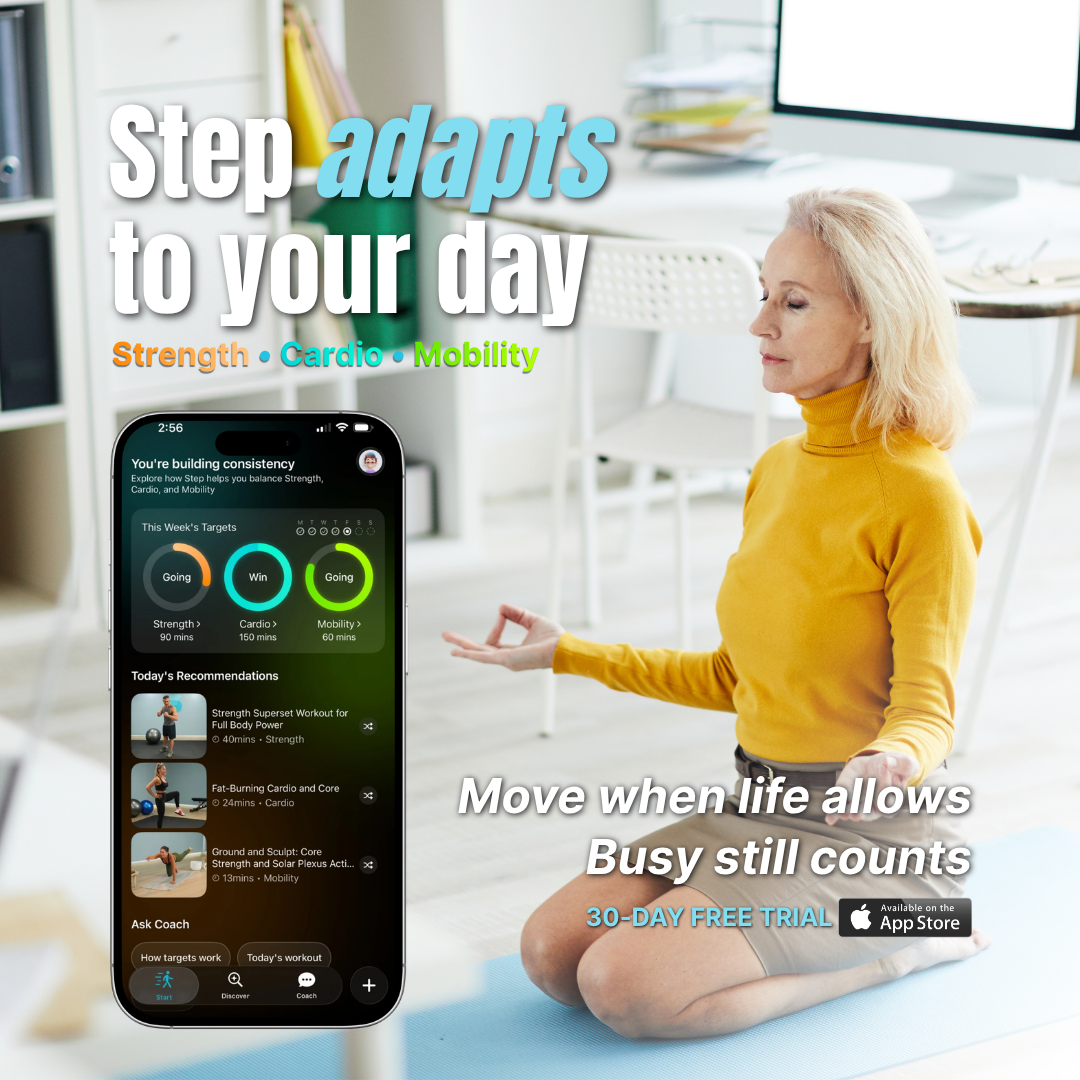
How Step.co Helps Solve This Problem
Step.co is designed to address the exact reasons people struggle to lose weight.
Instead of focusing on one type of workout, Step uses a 3-target system:
- Strength
- Cardio
- Mobility
This helps ensure that your weekly movement is balanced, which is critical for fat loss after 40.
Step also supports:
- Short, consistent workouts
- Lower-impact training options
- Smarter weekly structure
- Reduced decision fatigue
This makes it easier to stay consistent, which is the most important factor in weight loss.
Common Questions About Weight Loss and Exercise
Why am I exercising but gaining weight?
This can happen due to muscle gain, water retention, or increased calorie intake. It does not always mean fat gain.
How long does it take to see weight loss results?
Most people see measurable changes after 4 to 8 weeks of consistent training and proper nutrition.
Is cardio or strength better for fat loss?
Both are important. Combining them produces the best results.
Do I need high-intensity workouts to lose weight?
No. Moderate, consistent workouts are often more effective and sustainable.
Final Takeaway
If you’re not losing weight despite exercising, the issue is usually not effort. It is strategy.
Weight loss depends on:
- Balanced training
- Muscle preservation
- Recovery
- Consistency
The goal is not to work harder. The goal is to work smarter in a way your body can sustain.
Read More

How Can Women Over 40 Lose Visceral Fat?
Women over 40 can reduce visceral fat through a combination of regular aerobic movement such as brisk walking, strength training, healthy nutrition, adequate recovery, and a routine they can maintain consistently. You cannot target visceral fat with abdominal exercises alone, and there is no special heart-rate zone that selectively melts belly fat. The strongest evidence supports reducing overall body fat while preserving muscle and staying physically active across the week. For women entering

Is Walking a Good Workout for Busy Adults Over 40?
Yes, walking is one of the best workout choices for busy adults over 40 because it is low-impact, easy to repeat, and strongly linked to better heart health, longevity, mood, and daily energy. For people who do not have time for long gym sessions, walking offers a realistic way to build a healthier lifestyle. The challenge is not whether walking works. The challenge is staying consistent. This is where Step.co’s Walk and Talk feature makes walking more useful, more accountable, and more social.

What Is Social Fitness and Why Does It Help You Stay Consistent?
Social fitness means using connection, accountability, and shared movement to make exercise easier to repeat. Research shows that people are more likely to stay active when they feel supported by others, whether that support comes from friends, family, coaches, or a live class community. For many people, social fitness works because it turns exercise from a private task into a shared routine. This is why Step.co is bringing social movement into the app through features like Workout Together and