
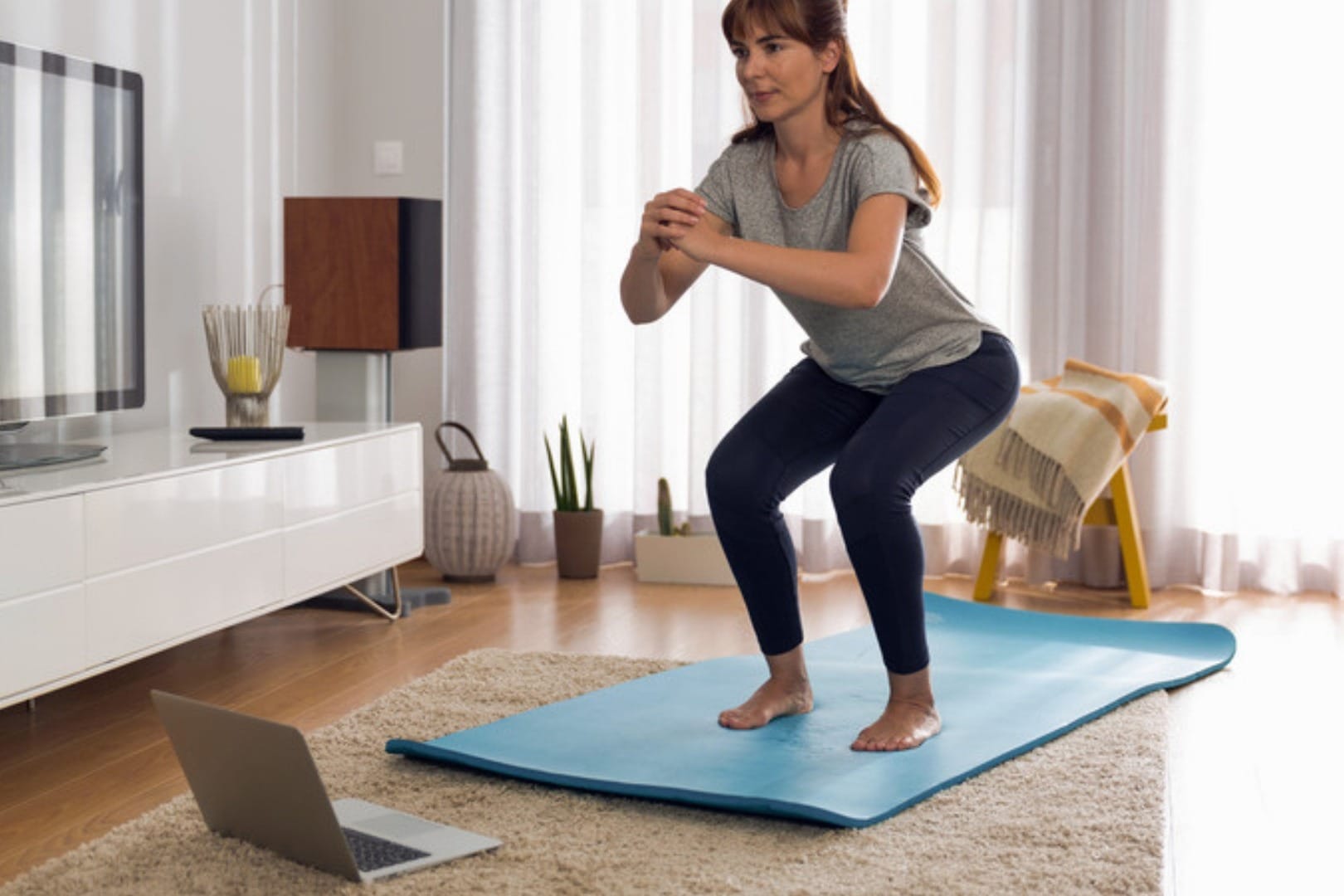
How Can Women Start Strength Training at Home in Their 40s?
Yes. You can start strength training at home with a sturdy chair, a clear patch of floor, and about 20 to 30 minutes, 2 or 3 days a week. You don't need a gym, and you don't need heavy weights. A few simple moves, done slowly, are enough to begin.
This guide shows you what you need, a short routine you can do in the living room, and how to fit it into a week that also includes Cardio and Flexibility. This is the Strength part, built for starting at home.
Why Strength Matters for Everyday Life
A lot of women notice everyday tasks start to feel harder in their 40s and 50s. Carrying a full grocery bag. Getting up from the floor. Standing up from a low chair.
A big part of that is muscle. Harvard Health notes that muscle tends to drop with age, so regular strength work matters more after 40, not less.
The good news is you don't have to train hard to get started. You don't need high-intensity sessions. That question is covered in our post on strength training over 40 without high-intensity workouts. Slow, steady work at home is a solid way in.
What You Need at Home
Keep the setup simple.
- A solid chair. Pick one that doesn't roll or slip. You'll hold the back of it for balance.
- A clear patch of floor. About the size of a yoga mat is enough.
- Clothes you can move in. A T-shirt and leggings are fine.
- Optional light weights. A pair of light dumbbells, or two filled water bottles.
If you have a mat, use it. If you don't, a carpet or a folded towel works for the floor moves.
A Simple Home Strength Routine
These moves come from the NHS strength exercises page. They're meant to be done at home. Start with 5 slow repetitions of each one. As it gets easier, build up toward 8 to 12. Go through the list once, rest for a minute, and then repeat it. Two rounds will take about 20 minutes.
5 reps
to start, slow and controlled
2 rounds
about 20 minutes
2 to 3
days a week, with a rest day between
Source: NHS strength exercises
Move slowly. You'll feel the muscles working, not a sharp pain. If a move hurts, skip it.
Sit-to-stand
5 to 10Sit near the front of the chair, feet hip-width apart. Lean slightly forward and stand up using your legs, not your hands. Stand tall, then sit down slowly. Use your hands only if you need a little help.
Mini-squats
5 to 10Hold the back of the chair. Feet hip-width apart. Bend your knees as far as feels comfortable, keeping them facing forward. Stand back up and gently squeeze your buttocks as you rise.
Wall push-up
5 to 10Stand at arm's length from a wall. Place your hands on the wall at chest height. Keep your back straight, bend your arms, then press back. If 10 in a row feels like too much, do 2 or 3 shorter sets.
Calf raises
5 to 10Hold the back of the chair. Lift both heels off the floor, then lower them slowly. When this feels easy, try it without holding on.
Sideways leg lift
5 each sideHold the chair. Raise one leg out to the side, keeping your hips level, then lower it. Switch legs. Don't lean away from the working leg.
Backward leg lift
5 each sideHold the chair and stand tall. Lift one straight leg behind you without arching your back. Pause for a second or two, then lower. Switch legs.
Biceps curls
5 to 8 each armHold a light dumbbell or a water bottle in each hand. Keep your elbows by your sides, bend your arms until your hands reach your shoulders, then lower slowly. You can also do this seated.
That's the whole routine. Seven moves, mostly with a chair, and weights only if you have them.
You don't need a gym to get started. You need a chair and a little floor space.
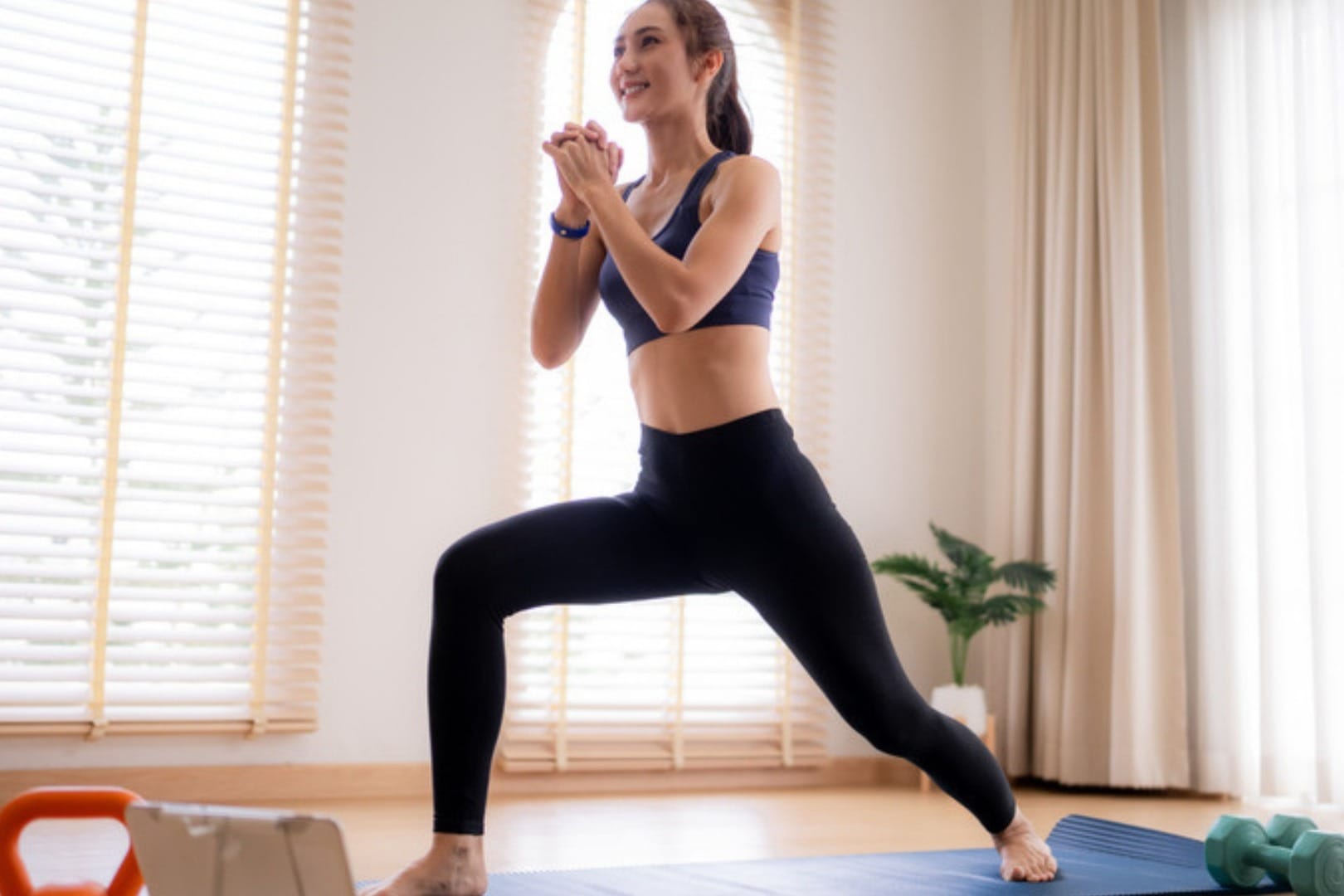
How to Fit It Into Your Week
Aim for 2 or 3 strength days, with at least one day between them. Monday and Thursday work well. So do Monday, Thursday and Saturday.
On those days, do this routine, then add a few minutes of stretching. Our 10-minute Flexibility routine is an easy add-on once your muscles are warm.
The other days can be Cardio, like a brisk walk, or a lighter Flexibility day. If walking is your main cardio, read Is Walking a Good Workout for Busy Adults Over 40?
When you only have 10 or 15 minutes
Do one round instead of two. A short session still counts, and it keeps the habit going.
When a move feels too hard
Do fewer repetitions, or use your hands more on the sit-to-stand. The NHS suggests starting with 5 slow reps and building up. There's no prize for rushing.
When you're starting after a long break
Begin with one round, twice a week. Give yourself a few weeks before you add a third day.
Common Mistakes to Avoid
- Waiting until you join a gym. You can start in the living room this week.
- Rushing the reps. Slow sits and slow stands help you stay in control.
- Holding your breath. Breathe out as you lift or stand, and breathe in as you lower.
- Doing strength days back to back. A day in between gives your muscles time to recover.
- Skipping the weeks that feel ordinary. What matters is repeating the plan, not one perfect session.
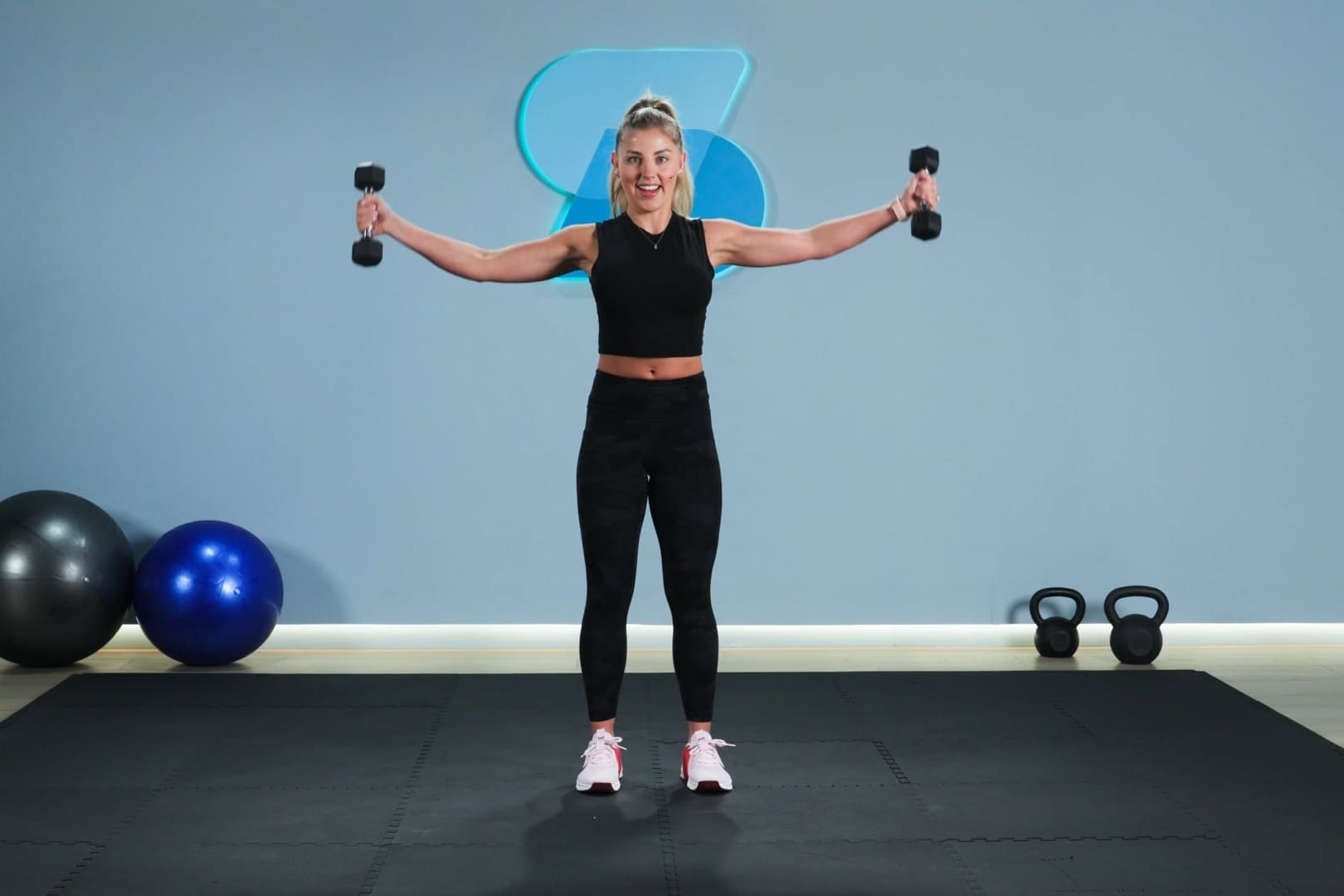
Try this today
Start at home in three small steps
- Clear a little floor space. Grab a sturdy chair and, if you have them, two water bottles.
- Do one slow round. Work through the seven moves, 5 reps each, without rushing.
- Finish with 5 minutes of stretching. Your muscles are already warm, so it's a natural moment for Flexibility.
How Step Helps
Knowing you should do Strength is easy. Knowing what to do on a busy Wednesday is harder.
Step gives you weekly goals for Strength, Cardio and Flexibility, and your Movement Score shows how you're tracking. On the Start screen, it suggests a few sessions for you.
Step tells you what to do next.
Got a question about a move? Ask Coach in the app.
Less guessing. More guidance.
FAQ: Strength Training at Home After 40
Can I start if I've never done strength training?
Yes. Begin with the chair moves, keep the reps slow, and build up over a few weeks.
Do I need weights?
Not at first. Sit-to-stand, wall push-ups, calf raises and the leg lifts all use your own body. Add water bottles or light dumbbells for the biceps curls when you're ready.
How often should I do this?
Two or three days a week is a good target. The NHS suggests doing strength exercises at least twice a week. Leave a day between sessions.
Can I do this if I haven't exercised in years?
Yes, but start gently. One round, twice a week, is enough at the beginning. If you have a health condition or you're new to exercise, check with your doctor before you start.
Final Takeaway
You can start strength training at home after 40 with a chair, a little floor space, and 20 minutes. Do the routine 2 or 3 days a week, move slowly, and add a few minutes of Flexibility at the end. You don't need to wait for the perfect plan, the right clothes, or a gym membership. You can start this week.
A chair, some floor space, and 20 minutes is enough to begin.
Ready to make Strength a habit?
Available on the App Store.
Available on the App Store.Read More
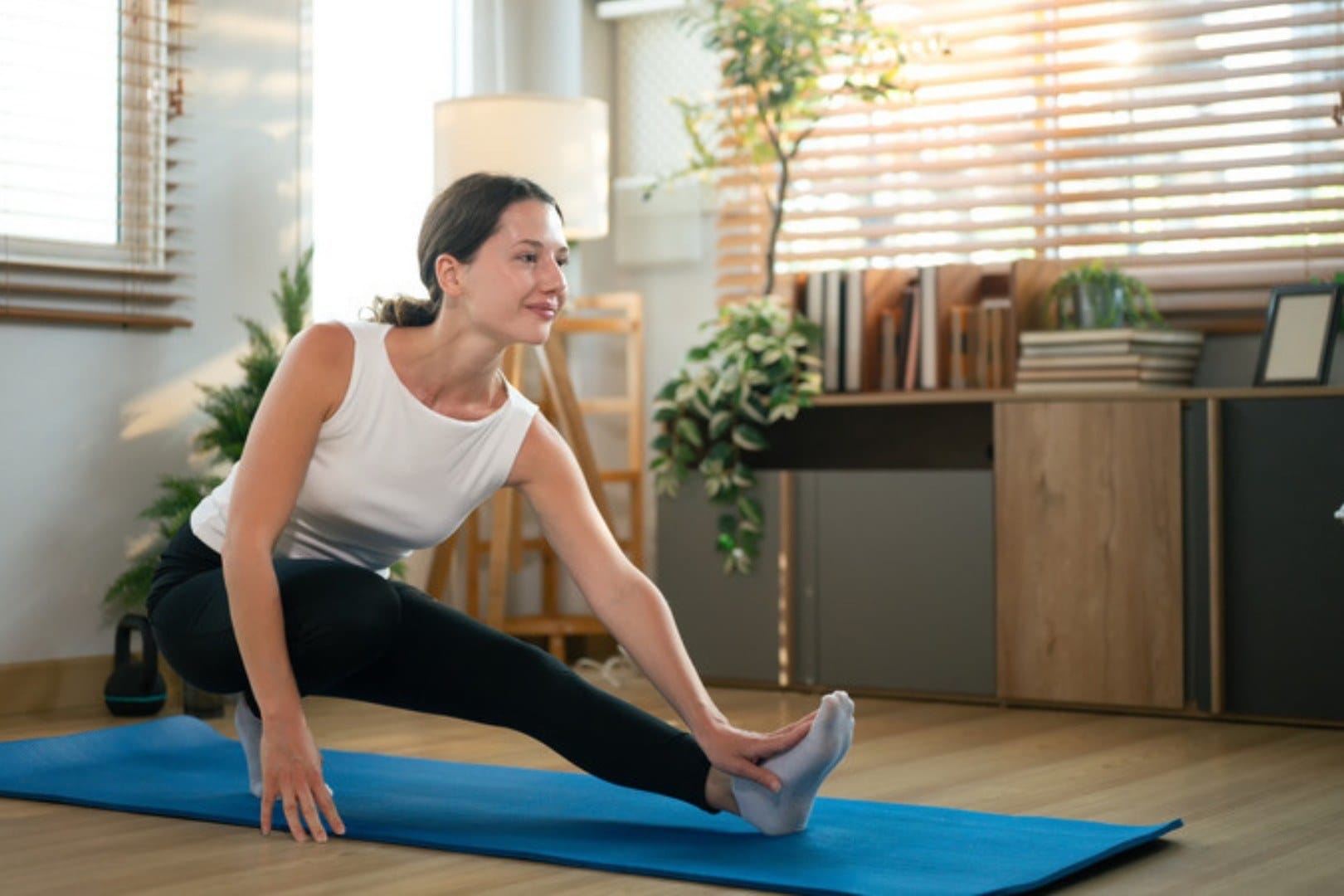
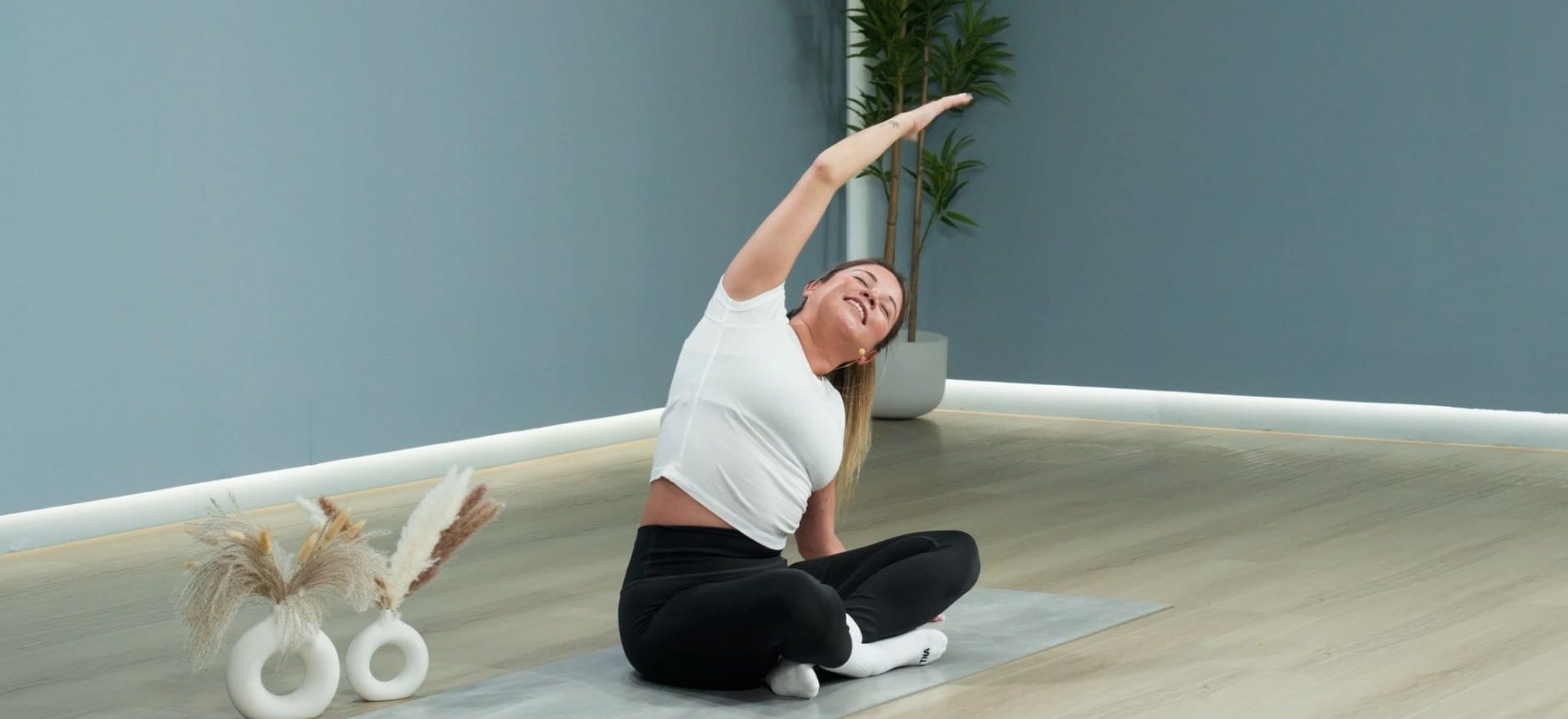
A 10-Minute Flexibility Routine You Can Do at Home
About 10 minutes of gentle stretching on most days is a good start. Here is a simple routine for adults over 40, and when to fit it in.
How Should You Plan Your Workout Week?
Most adults over 40 do well with Strength 2 to 3 days a week, Cardio on most days, and a little Flexibility almost every day.

How Can Women Lose Visceral Fat?
Women over 40 can reduce visceral fat through a combination of regular aerobic movement such as brisk walking, strength training, healthy nutrition, adequate recovery, and a routine they can maintain consistently. You cannot target visceral fat with abdominal exercises alone, and there is no special heart-rate zone that selectively melts belly fat. The strongest evidence supports reducing overall body fat while preserving muscle and staying physically active across the week. For women entering